Why Invest in St. Louis Class-A Multifamily Development?
02
June
2022



St. Louis is one of the best 20 cities for renters, according to recent research from WalletHub. The report analyzes the same key criteria real estate investors use, including activity in the rental market, job and population growth, and the preference of households to rent rather than own. Today St. Louis is synonymous with BBQ, brewing, baseball, and the blues. 25 million tourists visit St. Louis every year, fueling a $1 billion tourism industry. Tourists are drawn to attractions like The Saint Louis Zoo, the Saint Louis Art Museum, Saint Louis Science Center, Anheuser-Busch InBev Brewery, Lewis & Clark State Historic Site, the world-famous St. Louis Symphony Orchestra, and pro athletics including MLB (St. Louis Cardinals) and ice hockey (St. Louis Blues).
Of course, as the cliche goes, the three most important factors in a successful real estate investment are location, location, and location—not just what part of town, but which town.
St. Louis, MO doesn’t spike on many investor’s radar due to a slight decline in population over the past decade. Dig a little deeper, though, and the opportunity becomes evident. Named one of the most undervalued cities in the US by SmartAsset, St. Louis has much to recommend it as prime real estate for Class A multifamily development, including:
- American heritage city, the “Gateway to the West”.
- Commitment to beautification and development.
- Strong legacy employers like Boeing and Anheuser-Busch.
- Young population, with increased presence of Millenials and Gen Z.
- High quality of life at an affordable price.
- Majority renter population.
- Ongoing housing shortage.
- Affordable property values, even in the best neighborhoods.
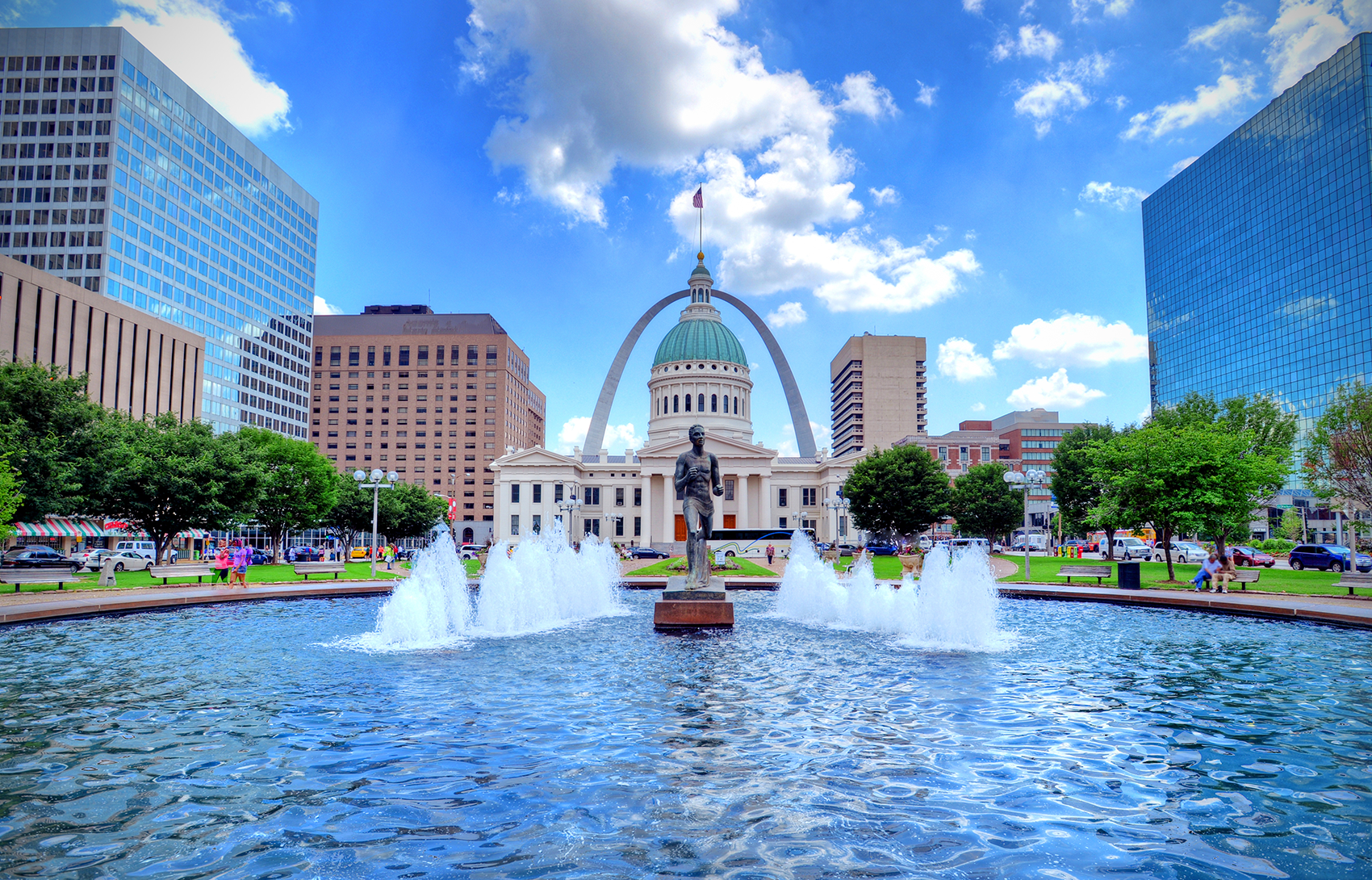
St. Louis at a Glance
Perched on the banks of the mighty Mississippi River, St. Louis is home to a population just over 308,000. But the city also anchors a sprawling bi-state metro, 2.8 million people living in Missouri and across the river in Illinois, the 20th-largest metroplex in the US.
These 2.8 million residents, with their mean household income just north of $60,500, contribute to a metro-wide GDP of just under $173.5 billion, according to the Federal Reserve Bank of St. Louis—a figure that has increased 29% over the last decade.
Commitment to Beautification and Development
With nearly $8 billion committed to beautifications and development as of 2018, St. Louis is getting a major facelift, with new districts and developments popping up particularly in Midtown.
This commitment reflects the optimism of a young, well-paid population, attracted to this heritage city due to the low cost of living, high quality of life, and emerging opportunities in tech and the arts.
Examples include:
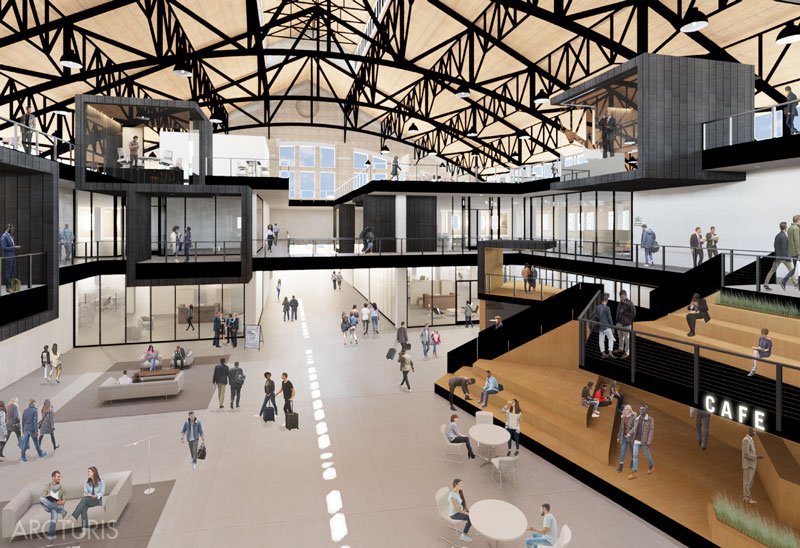
● Armory District - 250,000 square feet of office space with a greenway path and restaurant space built into a gorgeous art-deco building with an illustrious history.
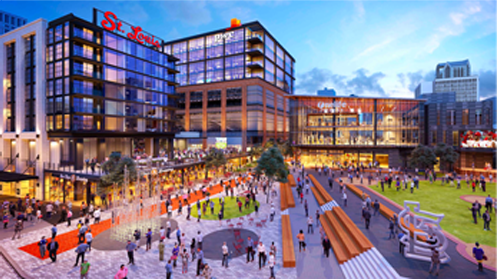
● Ballpark Village Phase 2 - A $260 million development of 700,000 square feet expected to add 1,000 permanent jobs downtown, including office space, retail space, dining, a hotel, and highrise Class-A multifamily.

● Chouteau Greenway - An urban trail intended to break up the concrete jungle and bring greenery, fitness, and morale to twenty infill neighborhoods.
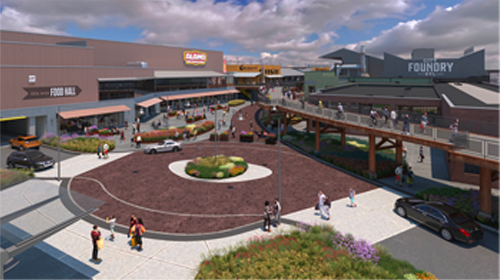
● City Foundry - A 15-acre mixed-use development set to revolutionize the already-impressive liveability of Midtown with the addition of dining, shopping, office space, entertainment, an Alamo Drafthouse, and 700-capacity multi-purpose event space 18Rails.
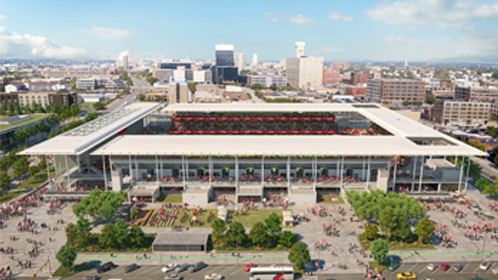
● Soccer Stadium - A 30-acre, 22,500-capacity soccer stadium to anticipate the return of Major League Soccer to an already-impressive pro sports scene.

● NGA West Campus - A $1.7 billion 97-acre campus in historic St. Louis Place to expand the operations of the National Geospatial-Intelligence Agency.
Development and beautification is a sign of optimism in a real estate market, as well as a commitment to attract businesses and people. With high-end development underway citywide and especially midtown, an already good-looking city will look even better a few short years from now.
Commitment to Job Growth
Job activity is one of the best crystal balls into the future of a real estate market. While hiring has slowed down, job growth continues in St. Louis—up 0.6% in 2020, with mean salaries up 2%.
The health of the St. Louis job market is driven by tech. Dubbed the “high-tech hub of the Midwest” by the CNN, Forbes cited a 2.2% growth in high-tech employment when naming St. Louis one of the best metros for business and careers in 2019.
Home to nine Fortune 500 companies, St. Louis boasts many Blue Chip headquarters, noted for their longevity and industry leadership. Household names headquartered in St. Louis include:
- Nestlé Purina PetCare
- Anheuser-Busch
- Boeing
- Wells Fargo Advisors
- Spire, Inc.
- Square, Inc.
- U.S. Bank
- Anthem BlueCross and Blue Shield
- U.S. Department of Agriculture
- National Geospatial-Intelligence Agency
- Edward Jones Investments
A hub for the booming field of bio-technology and medicine, the Washington University School of Medicine has contributed heavily to the Human Genome Project and the operation of the Alvin J. Siteman Cancer Center. Pharma giant Pfizer also maintains operations in St. Louis.
As high-paying jobs come into St. Louis, the indirect jobs multiplier of each industry posits additional jobs that arise from the economy to support those new jobs. For example, the Economic Policy Institute estimates that every 100 jobs directly created by the finance and insurance industry creates an additional 364.4 jobs indirectly.
With a cost of doing business 8% below the national average, St. Louis is also attractive to startups and small businesses, with Forbes naming St. Louis a top-ten city in the US for startups in 2018.
Young Population
The biggest story in St. Louis demographics is the increasingly young population, with Millennials outnumbering Boomers for the first time as of 2017. While the overall population of the metro declined slightly between 2010 and 2015, the population of educated Millenials increased by 33.69%.
What can we infer about this younger population, drawn by a booming tech sector, low cost of living, and high quality of life? According to the National Apartment Association, Millennials show a preference for single-family homes (possibly an after-effect of the COVID-19 pandemic and social distancing), but recognize by a 60% margin the convenience of apartment living for their dynamic lifestyles.
Young professionals aren’t even sticklers for happening city centers like Midtown. Since the COVID-19 pandemic, Millennial and Gen Z buyers and renters have shown a pronounced preference for suburbs over infill. This represents a substantial opportunity for multifamily developers in desirable suburbs, where land is easier to come by.
Most of all, young renters prioritize spacious floorplans and high-speed internet, which Class A apartment complexes can deliver at an affordable price to Millennial professionals.
Majority Renters
With high quality of life, low cost of living, and disposable income on their sides, you might expect the burgeoning population of young workers to fuel a flight from renting and toward homeownership. This is not the case, however.
St. Louis has long distinguished itself with its unusually high population of renters. Over half of all St. Louis residents are renters, a trend that persists regardless of the heat in the housing market. St. Louis made WalletHub’s list of top 50 places to rent in the US—cities where renting represented a good value compared to buying.
Housing Shortage
One of the driving forces behind the current strength in the rental market is an acute housing shortage. Roofstock reports an ongoing lack of housing inventory in the market.
Additionally, the average down payment of 15% prices many aspiring first-time homeowners out of the market, forcing them to save longer and commit more capital to homeownership. This translates to a longer tenure as a renter—often in high-end property like Class A multifamily, as they save for a higher down payment.
Growth in Property Value
While multifamily and single-family homes trade in different marketplaces, trends in home prices often indicate the strength of a real estate market.
According to the Freddie Mac Home Price Index for May 2021, St. Louis home prices have grown 37.6% over the last five years, 13.6% over the preceding twelve months, and 1.1% over the preceding month. Moreover, home prices have not yet surpassed their peak from 2006 prior to the great recession, indicating a real estate market that still has substantial room to grow.
Highly Investable, Even in the Best Neighborhoods
At $105-$120 per square foot, St. Louis multifamily property is highly “investable”—meaning, affordable for investors to get into. Compare this to markets like Honalulu, Park City, or New York, where even wealthy groups can barely afford to invest in core real estate.
Meanwhile, even relatively small funds can afford prime real estate in Class A locations within St. Louis. Remember, location, location, location. Even if the real estate market corrects, prime locations will always be in demand—and prime locations in St. Louis remain affordable.
Class A Multifamily Development
The Class A multifamily development cycle is as follows:
- Planning - Identify the site, audit building requirements, and consult with architects, designers, contractors, and the city permitting department to create building specifications.
- Purchase - Close on the property and obtain bridge financing or a construction loan.
- Construction - Build out the structure according to the building specifications.
- Permitting - Obtain occupancy permits from state and city authorities.
- Lease-Up - Fill the building with tenants and stabilize income/expenses.
- Disposition - Sell the property to a REIT, hedge fund, or family office; or refinance to cash out the investment capital and retain the property.
Buyers of leased-up Class A multifamily tend to be high-cap REITs and funds who buy with little leverage to produce stable cash flow.
Risk Factors
Class A multifamily development is a lengthy process, spanning 1-3 years or more, with significant debt and little cash flow. Cost overruns or delays can derail such a development, even with proper planning, requiring emergency financing or cash calls.
The best hedge against this risk is to invest with an experienced developer with a track record of success in the target market.
Conclusion
When it comes to Core Class A multifamily development, St. Louis is a market ripe for the picking. A heritage city on the upswing in terms of demographics, employment, salaries, and quality of life, extensive development and a burgeoning tech sector represent a rising tide that will lift all boats—especially multifamily developers looking for an affordable market with a ready supply of motivated renters with disposable income and a taste for the good life.
Questions? Want to start investing in multifamily properties? Contact our team at invest@infinity9.com.